Flood Cleanup in Woodstock, GA
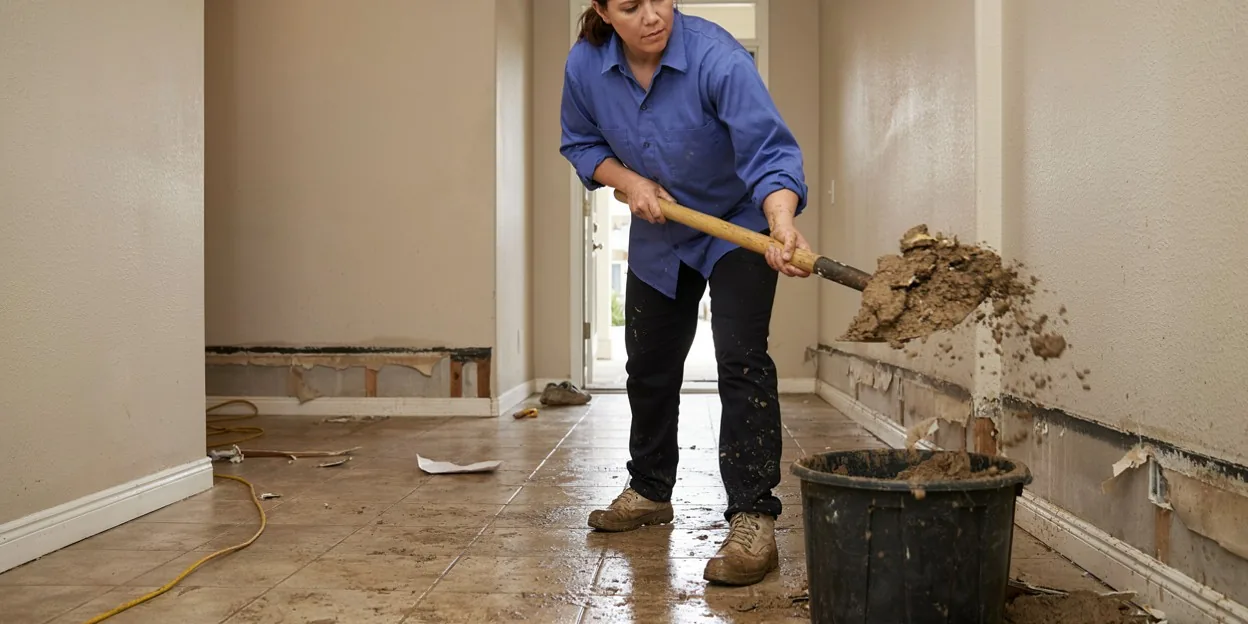
The rain fell all night, the creek behind the subdivision came over its bank, and by morning there is an inch of brown water across the basement and a mud line on the drywall. This site connects you by phone with an independent local provider who does flood cleanup in Woodstock and across Cherokee County.
Storm water is handled by what it carried in
The crew treats outside water as contaminated from the start, because creek and storm runoff in this county carries soil, yard chemicals, septic overflow, and whatever the storm drain was holding. They pump out the standing water, then separate the affected rooms from the clean part of the house with plastic so mud and debris are not tracked upstairs.
Porous materials the water touched come out: carpet, pad, insulation, and the lower drywall. Hard surfaces get cleaned and disinfected. Then the drying equipment goes in, and the crew meters the framing and slab until the readings reach target. Photos and a list of removed materials are kept as the work goes, since flood losses get looked at closely by adjusters.
Stay out of the water until the power is off
Do not walk through flood water in a basement with the power on. Have the breaker for that level turned off, or call the utility if the panel itself is wet. Keep children and pets upstairs. Do not run the furnace or the air handler if water reached it.
Photograph the water line on the walls, the outside of the house where the water came in, and the yard. Note the time the water rose and when it stopped. Then call and say that the water came from outside, because that changes what the crew brings.
What leaves the house and what gets cleaned
Carpet, pad, and fiberglass insulation that took flood water are removed and bagged. Drywall is cut above the highest wet reading and discarded. Cabinets that stood in the water are metered at the base and often come out. Concrete, tile, and framing lumber stay and get cleaned, disinfected, and dried. Contents are sorted by material: hard goods can usually be cleaned, while upholstered furniture and cardboard boxes that sat in creek water typically do not come back.
Once the contaminated materials are out, the job becomes structural drying, and if the water pooled under the house it also involves crawl space water extraction.
Little River, Noonday Creek, and the September 2009 water line
Woodstock is drained by Little River on the north side and Noonday Creek on the south and west, both flowing north into the Little River arm of Lake Allatoona. The subdivisions along Arnold Mill Road, Bells Ferry Road, and the lower streets of Towne Lake sit close to those creek bottoms, and the red clay on the slopes above sends a hard rain straight down to them.
The reference storm is still September 2009. Between September 15 and 23 that year the metro took days of rain on saturated ground, Noonday Creek closed Interstate 575 and Georgia 92, Little River shut Arnold Mill Road, and Lake Allatoona rose more than ten feet over full pool for the first time since 1990. Houses that had never seen water in twenty years took it through basement walls and garage doors. Tropical Storm Zeta added wind and outages on October 29, 2020, and pop-up summer storms drop two inches in an afternoon most years. If the water rose from a pit rather than the creek, the basement flooding cleanup page covers that loss.
When you call about creek or storm water in the house
Say that the water came from outside, which level it reached, whether it has gone down, and whether the power is off. Mention septic or sewage if you smell it. Have the neighborhood name and a callback number ready. Call (770) 697-0510.